We are all talking about composite decking, how it’s better than wood, lasts longer, requires a lot less maintenance, it comes in multiple colors, and other benefits that come with it specifically for humid places like Washington State. This humid area that covers Tacoma, Puyallup and Seattle gets a lot of seasonal rain and like we all know, wood doesn’t get along well with water, composite is more resistant and that’s another benefit to choose composite over wood decks. But how many of us know in reality what exactly are composite boards made of.
In this blog we will talk about the structure, how many types, how many brands, and what the differences are between them. Let’s get into it.
The Core Components of Composite Decking
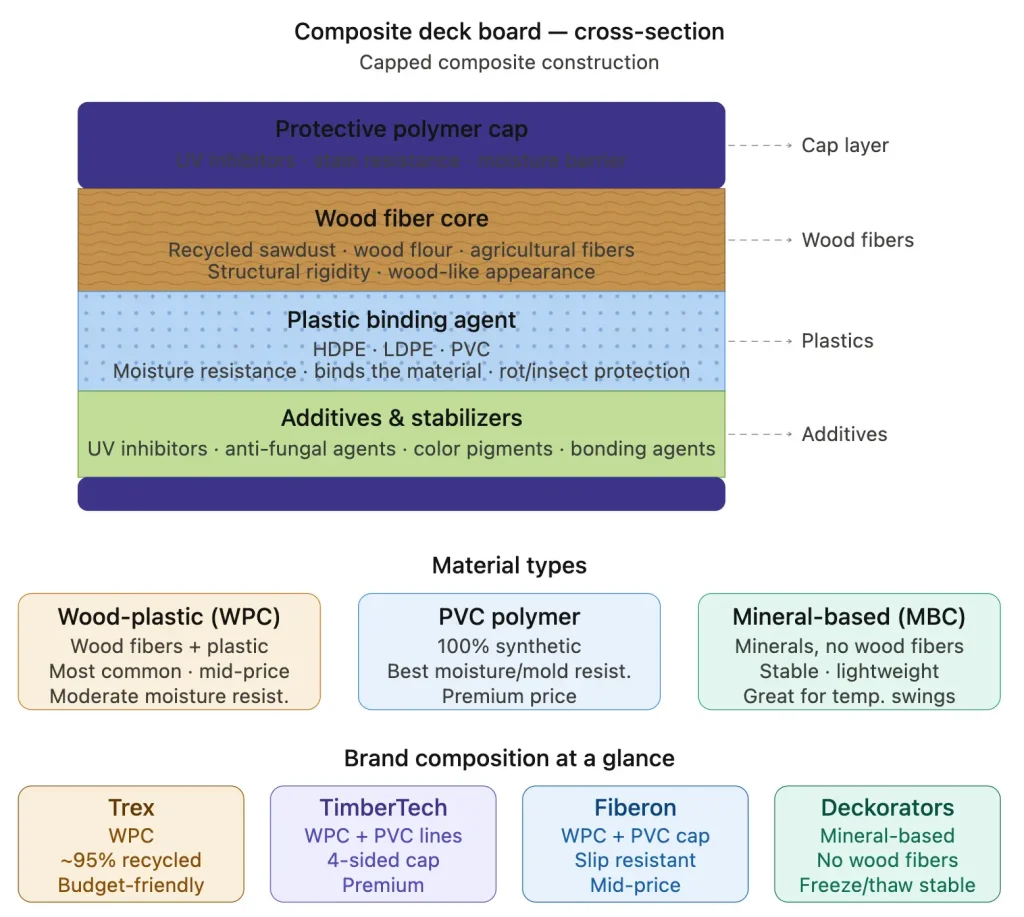
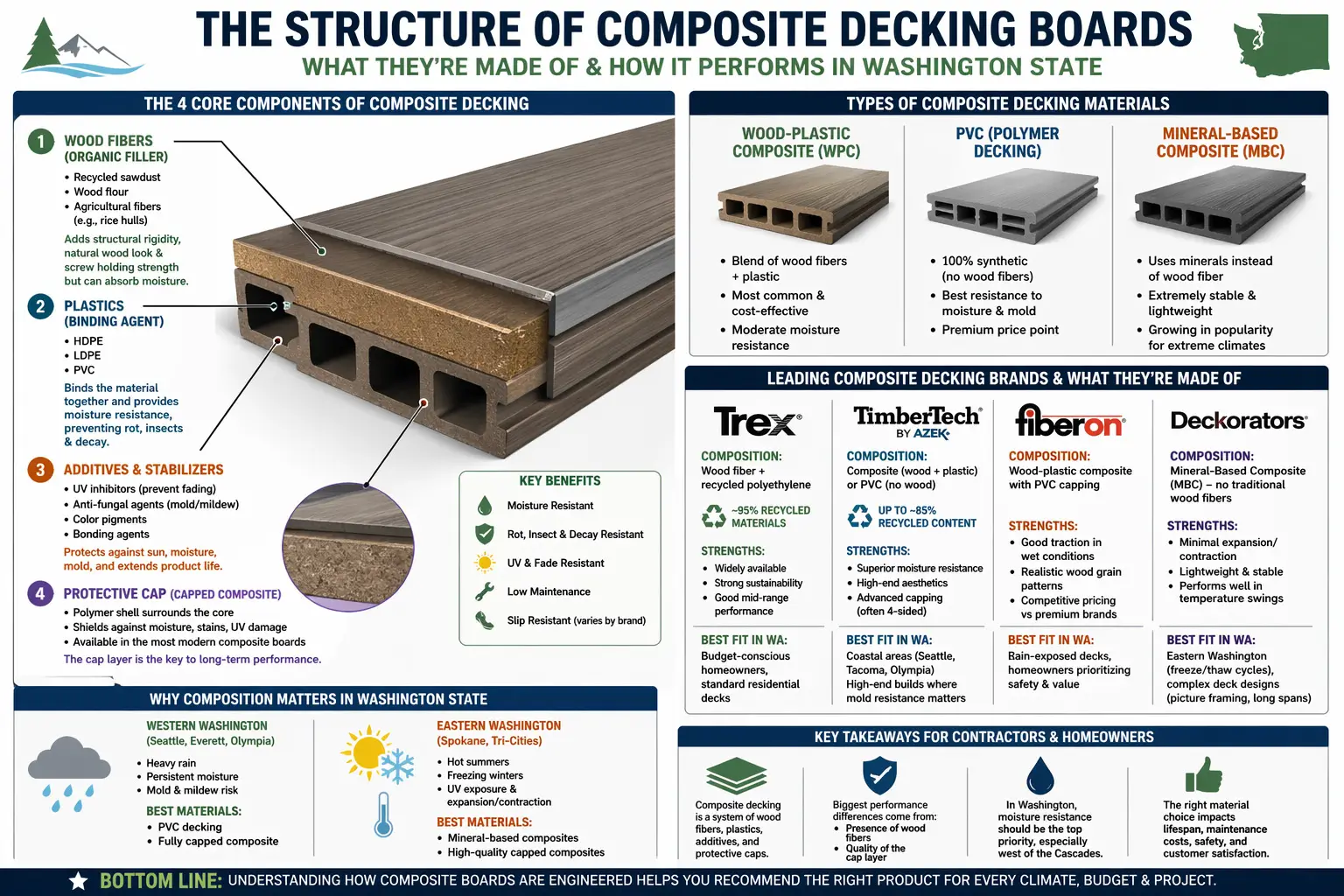
At its most basic level, composite decking is an engineered product made from a blend of:
1. Wood Fibers (Organic Filler)
Most traditional composite boards contain:
- Recycled sawdust
- Wood flour
- Agricultural fibers (like rice hulls)
These fibers give the board:
- Structural rigidity
- A more natural “wood-like” appearance
- Better screw retention
However, they also introduce moisture sensitivity—which is a key concern in Washington’s wet climate.
2. Plastics (Binding Agent)
The second major component is thermoplastic, typically:
- HDPE (High-Density Polyethylene)
- LDPE (Low-Density Polyethylene)
- PVC (Polyvinyl Chloride)
The plastic:
- Binds the material together
- Provides moisture resistance
- Reduces rot, insects, and decay
Higher-end boards may use 100% PVC, eliminating wood fibers entirely for maximum water resistance—ideal for Western Washington conditions.
3. Additives & Stabilizers
Manufacturers include proprietary chemical blends such as:
- UV inhibitors (prevent fading)
- Anti-fungal agents (combat mold/mildew)
- Color pigments
- Bonding agents
These additives are crucial in the Pacific Northwest, where constant moisture + limited sun exposure = mold risk.
4. Protective Cap (Capped Composite)
Most modern boards are “capped,” meaning:
- A polymer shell surrounds the core
- It protects against moisture, stains, and UV damage
This outer layer is one of the biggest performance upgrades in the industry.
Types of Composite Decking Materials
Wood-Plastic Composite (WPC)
- Blend of wood fibers + plastic
- Most common and cost-effective
- Moderate moisture resistance
PVC (Polymer Decking)
- 100% synthetic (no wood fibers)
- Best resistance to moisture and mold
- Premium price point
Mineral-Based Composite (MBC)
- Uses minerals instead of wood fiber
- Extremely stable and lightweight
- Growing in popularity for extreme climates
Leading Composite Decking Brands & What They’re Made Of
Trex (Industry Pioneer)
- Composition: Wood fiber + recycled polyethylene
- Uses ~95% recycled materials
- Strengths:
- Widely available across Washington
- Strong sustainability story
- Good mid-range performance
Best fit in WA: Budget-conscious homeowners, standard residential decks
TimberTech / AZEK (Premium Performance)
- Two main product types:
- Composite (wood + plastic)
- PVC (no wood at all)
- Up to ~85% recycled content
Strengths:
- Superior moisture resistance
- High-end aesthetics
- Advanced capping (often 4-sided)
Best fit in WA:
- Coastal areas (Seattle, Tacoma, Olympia)
- High-end builds where mold resistance matters
Fiberon (Balanced Performance)
- Composition: Wood-plastic composite with PVC capping
- Known for strong warranties and slip resistance
Strengths:
- Good traction in wet conditions
- Realistic wood grain patterns
- Competitive pricing vs premium brands
Best fit in WA:
- Rain-exposed decks
- Homeowners prioritizing safety and value
Deckorators (Innovative Materials)
- Composition: Mineral-Based Composite (MBC)
- No traditional wood fibers
Strengths:
- Minimal expansion/contraction
- Lightweight and stable
- Performs well in temperature swings
Best fit in WA:
- Eastern Washington (freeze/thaw cycles)
- Complex deck designs (picture framing, long spans)
Why Composition Matters in Washington State
Washington’s climate is one of the toughest in the U.S. for decking:
Western Washington (Seattle, Everett, Olympia)
- Heavy rain
- Persistent moisture
- Mold and mildew risk
Best materials:
- PVC decking
- Fully capped composite
Eastern Washington (Spokane, Tri-Cities)
- Hot summers
- Freezing winters
- UV exposure + expansion/contraction
Best materials:
- Mineral-based composites
- High-quality capped composites
Key Takeaways for Contractors & Homeowners
- Composite decking is not one material—it’s a system of wood fibers, plastics, additives, and protective caps.
- The biggest performance difference comes from:
- Presence of wood fibers
- Quality of the cap layer
- In Washington State, moisture resistance should be the top priority, especially west of the Cascades.
Composite vs Wood Decking Cost Comparison (Material + Labor)
| Deck Type | Example Product | Material Cost (Deck Boards Only) | Labor Cost (Installed) | Total Installed Cost |
|---|---|---|---|---|
| Pressure-Treated Wood | Pressure-Treated Pine Deck Board | $2 – $5 / sq ft | $15 – $30 / sq ft | $25 – $50 / sq ft |
| Cedar / Redwood Wood | Western Red Cedar Deck Board | $4 – $8 / sq ft | $18 – $32 / sq ft | $30 – $55 / sq ft |
| Composite (WPC – Wood + Plastic) | Trex Enhance Composite Deck Board | $4 – $11 / sq ft | $24 – $48 / sq ft | $40 – $80 / sq ft |
| PVC (100% Synthetic) | TimberTech PVC Deck Board | $5 – $12 / sq ft | $25 – $50 / sq ft | $45 – $85+ / sq ft |
| Mineral-Based Composite (MBC) | Deckorators Voyage MBC Deck Board | $6 – $16 / sq ft | $25 – $50 / sq ft | $50 – $90+ / sq ft |
Final Ideas
If you are a home owner planning to build a deck in Washington, the composition of the material you choose will directly impact the cost, lifespan, safety and how satisfied you will be with the final result.
Knowing what composite decking is is one factor, but you should also know what brands are out there on the market, what are the differences between them, and which ones are the best.