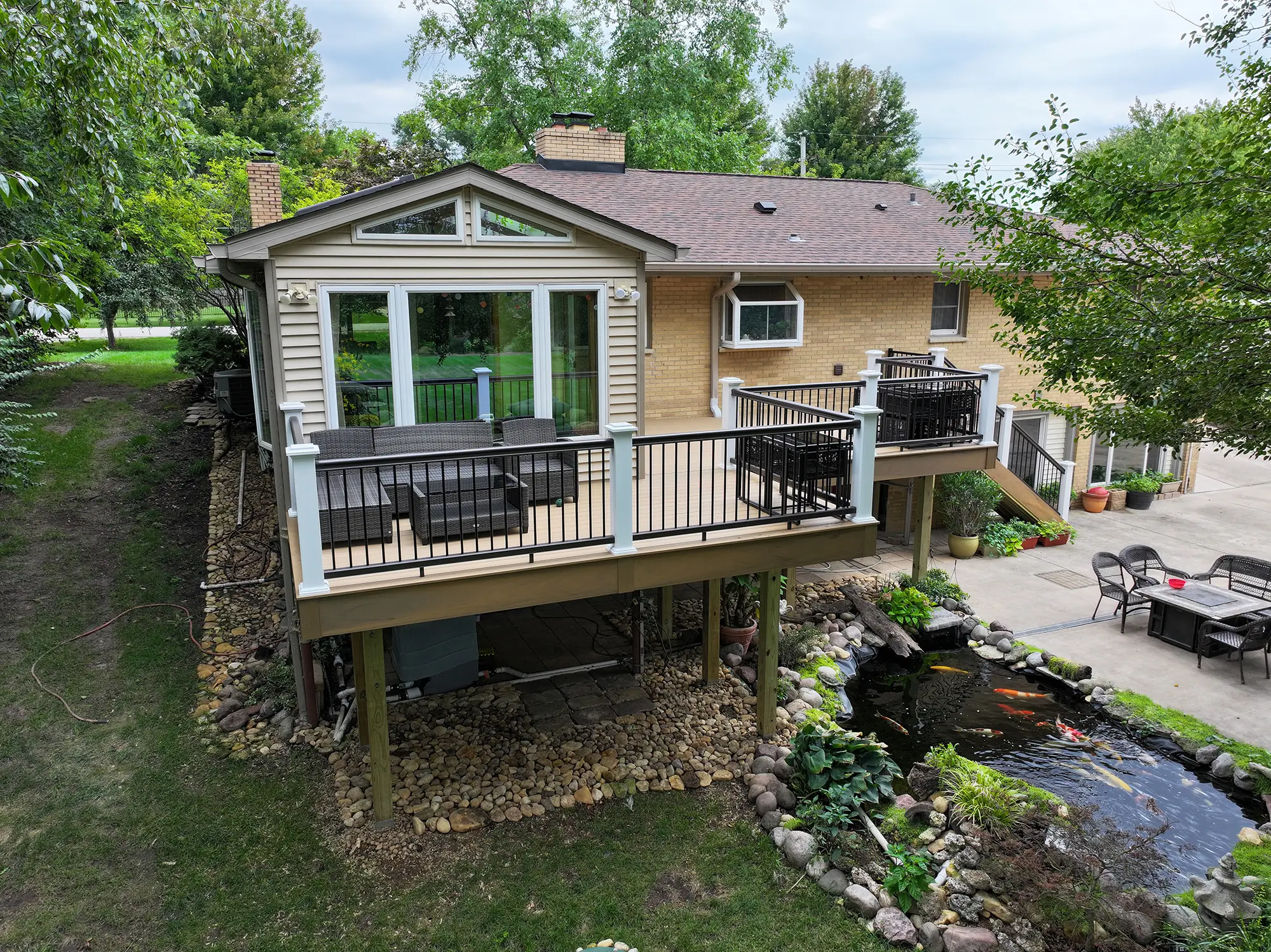
Owning a waterfront house is an amazing thing but it also comes with more responsibilities. You have to deal with the humidity, moisture and temperature changes. In these areas where the humidity is heavily present you want to make sure you build a deck of materials that will resist for a long time.
And again, a lake house is different than a beach house. The salty water will damage your wood deck quicker compared to a lake house. In this article we will explore the best options for lake and beach houses when it comes to building a deck in these humid areas. It isn’t rocket science, but many people don’t know these things, so, let’s get into it.
Why a Wood Deck Needs More Attention by the Water?
- Humidity & moisture is the number one problem here. The water exposed areas of your deck are at risk of wood swelling, warping, rot, mold, and fungal growth.
- Temperature changes are another thing to keep in mind, especially below -10°F in winter to 90°F+ in summer will cause repeated expansion and contraction of the wood. This is the cause of fasteners, warping or any deck structural degradation.
- Persistent dampness also speeds up rust on screws and nails. This is also the case on beach houses where the salt water will eat the nails during a few months. You definitely have to keep an eye on the rust here.
Top Wood Decking Options for Humid Environments
Just to make a slight comparison between a beach house and a lake house, we got Naperville as an example, this place doesn’t have to many lake houses, but according to the local deck builders in this area, if you own a lake house, here are the top durable materials that you would want to build your deck with:
1. Tropical Hardwood (Ipe, Tigerwood, Cumaru, Garapa, Machiche)
- Resistant to rot, insects, and moisture.
- It can last 25+ years in varying climates.
- Stays cool in summer and resists cracking.
- Best for homeowners who prefer the beauty of real wood and can make a higher investment in their deck.
2. Pressure-Treated Wood
- This is a cheap option, treated to resist rot and insects.
- Requires routine sealing or staining to maintain protection.
- Affordable short term, but it gets expansive in time because it requires more maintenance.
3. Cedar or Redwood
- This makes it resistant because of the oils that deter rot and warping.
- Lovely aging appearance and excellent for traditional aesthetic appeal.
- Requires regular maintenance.
4. Composite or PVC Decking (Trex, TimberTech, etc.)
- Extremely moisture- and rot-resistant, low-maintenance, and often backed by long warranties (25–50 years).
- Holds a sustained look—with less upkeep beyond periodic cleaning.
- On the downside, can retain heat and sometimes develop slippery surfaces in humidity.
Material Comparison
| Material | Pros | Cons | Best For… |
| Tropical Hardwood | Extremely durable, rot-resistant, beautiful | Expensive, heavy, needs initial treatment | A premium, long-lasting natural look |
| Pressure-Treated Wood | Affordable, readily available | Needs regular sealing/staining | Budget builds with planned upkeep |
| Cedar/Redwood | Naturally rot-resistant, visually appealing | Requires maintenance to preserve quality | Natural beauty with moderate care |
| Composite/PVC | Low maintenance, long life, rots/mold-resistant | Can be heat-retaining; sometimes slippery | Low effort, long-term performance |
A few Tips for Wooden Decks in Humid Areas
- Moisture damage and UV exposure can be warranted through sealing, staining, and/or waterproofing once a year or every 1–2 years.
- Regular cleaning and power washing mold, mildew, and slippery build-up.
- Especially after wet seasons, check for rot, rust, and other structural issues to the fasteners and deck boards and rails, and posts.
- Rusted or coated stainless hardware can be used to rust resistant hardware to moisture corrosion.
Can You Stain Your Deck When It’s Humid Out?
Some people can come up with the idea of staining the deck to protect it from humidity. This is a great option, but can you stain it when it’s also humid outside?
You certainly can choose to finish staining the deck in the summer months even with the increased humidity. The only thing to watch for is that the moisture content in the stain is indicative of the fact that it will take longer to fully dry. The deck will have to remain closed to all people, insects, pets and precipitation for the duration of the drying.
Of all the techniques to protect the wood from moisture, sealing the deck is perhaps the most efficient.
Conclusion
So, let’s get this straight: building a deck in a humid area has to be considered very carefully. The humidity and salt, if it’s a beach house, will eat up the wood in a couple of years. Water is the enemy of wood. But there are alternatives that you as a homeowner can choose from. For example, in terms of deck building, besides wood, you can go with composite PVC. This will make your life easier with lower maintenance. The only downside is that it won’t look like natural wood.
And one more thing: whatever you choose, the most important thing is to choose a material that fits your lifestyle and the climate you live in. Consulting with deck builders in your area will always be a good strategy in your decision-making process.