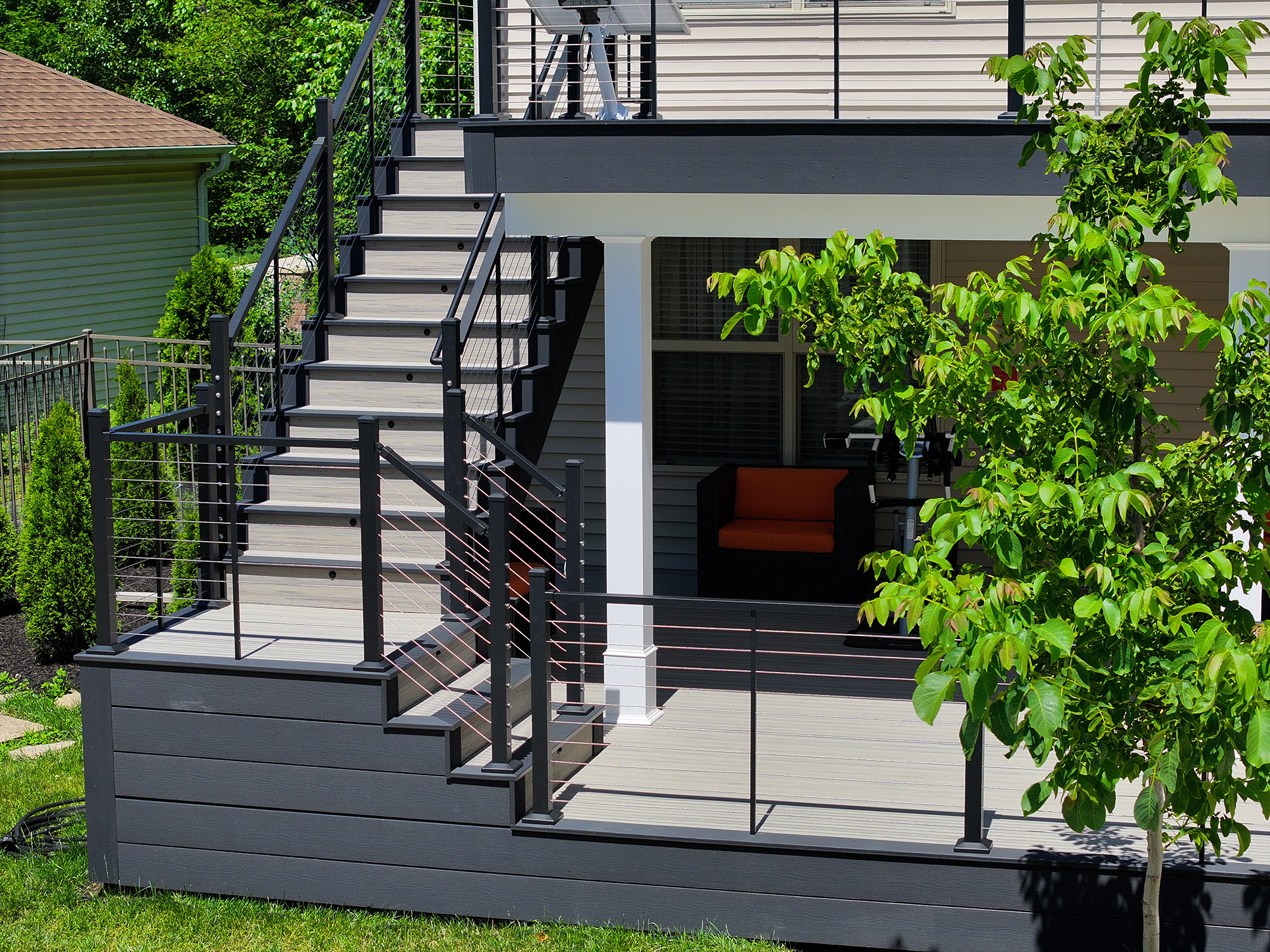
In Naperville, decks are much more than a feature of a home’s architectural appeal; they represent a way of life. Access to these structures allows for summer grilling get-togethers and morning coffee rituals, effortlessly integrated into daily routines. However, as with anything, time does take a toll. What do you do when your previously stunning deck appears to be worn, weathered, or aged?
To figure this out, I spoke to some of the most experienced deck builders in the area. With decades of honing the skill of deck restoration, construction, and maintenance, I was sure to get reliable answers. Regardless of the materials or techniques used, one thing was clear after our discussion: steel framing’s increasing popularity is changing the frequency and the extent to which homeowners are required to resurface their decks.
Here’s what I learned.
“Steel Framing Has Changed Everything”
“Ten years ago, when we were building decks, 95% of them were framed with pressure treated wood.” Miguel Herrera states, co-owner of one of the best deck design companies. “Now, that number is dropping FAST. Homeowners are asking for steel—and for good reason.”
Each region has its climate features, and for Naperville, summers are hot and humid while winters are freezing. Chicago’s hot, humid summers and freezing winters are ruthless toward traditional wood frames. Rot, warping, and insect damage used to be the leading cause of deck failures. But with steel, those concerns fade.
“A steel frame gives you a solid structure for 50 years or more,” adds Sarah Wilton, a structural engineer who consults with deck builders across DuPage County. “That means you don’t have to rebuild from the ground up. When it’s time for a refresh, you’re just resurfacing.”
What Resurfacing Really Involves
Most homeowners are under the impression that aging decks require a complete teardown. This is a common misconception that is simply untrue.
“People are shocked when we tell them the bones are still good,” says Jason Lee, a 22 year veteran deck builder. “If the steel frame is still perfectly sound, which it usually is, we can keep it and just replace the surface boards.”
Resurfacing is the process of removing old decking boards, inspecting the frame, and installing new surface materials which can be wood, composite or PVC. Homeowners often take this opportunity to update railings, change the directional layout of the decking or even expand the seating area.
“It’s like renovating your kitchen without knocking down any walls,” Jason says with a laugh. “You keep the structure, but the experience of the space completely transforms.”
How Often Should You Resurface?
According to the builders I interviewed, how often you need to resurface depends far more on the surface material than on the frame—especially if it’s steel.
Here’s the general timeline professionals shared:
- Wood Decking (cedar, pressure-treated):
Needs resurfacing every 10 to 15 years, sometimes sooner if not sealed regularly or exposed to full sun. - Composite Decking (like Trex):
Lasts about 25 to 30 years with minimal maintenance. “The structure beneath will outlast the boards, but that’s the point,” Sarah says. “It’s easier and cheaper to change the top than rebuild everything.” - PVC Decking:
Can go 30+ years with proper care, though some homeowners opt to resurface sooner for aesthetic upgrades or personal taste.
The bottom line? If your deck is framed with steel, the decision to resurface is less about necessity—and more about design, comfort, and timing.
Signs It Might Be Time
Every professional reiterated one point: never wait until something becomes a hazard.
“You don’t need to wait for your deck to fall apart to resurface it,” explains Miguel. “Faded areas, cracked boards, weak railings, and loose pieced are all signs it’s time to take a closer look.”
Sarah mentioned how a lot of clients decide to resurface due to the fact the space was out of alignment with their lifestyle. “People, and families evolve. Aesthetic and functional preferences evolve too. What excited you 15 years ago, likely isn’t what you want now. Resurfacing is a way to reclaim your deck without starting from zero.”
A Naperville Trend Rooted in Longevity
Homeowners appear to consider the long game. For example, young couples pouring capital in investment-grade durable siding, composites, and steel, or long-time residents selecting resurfacing instead of rebuilding showcase enduring design.
“People are more thoughtful now,” Jason mentions, “People want spaces that age well, both structurally and stylistically, and steel framing gives them that.”
Conclusion: A Deck Is a Living Space, Not Just Lumber
I learned a great deal from speaking with Naperville’s leading deck professionals about the longevity of steel-framed decks. I realized I was not considering the steel specifications and the lifespan of composite boards, but the people they spoke about caught my attention.
A builder spoke of a retired couple living in a western subdivision who resurfaced their deck so that they could sit out and enjoy reading together with worry about splinters. Another builder told me about a young family that had not used their backyard for many years until the area was resurfaced, and now, it was a safe and inviting space for toddlers and stargazing at bedtime.
Resurfacing restores the wood or PVC and provides a space that was once silenced while life went on the inside. It restores the home’s quiet within the lifeline of a deep breath. House and life, bound together.
Though steel framing may serve as the foundation, what stands perpendicularly is the life one lives today. It stands to reason that life, from time to time, deserves a reset. Not because the life you built is a hollow shell, but because you have grown. You have changed. Your needs shifted. Taste evolved. Your space is ready to fall in love again.
Craftsmanship truly reflects one’s skill and expertise builders served to the community not only reflects unique skill but also demonstrates continuity. They preserve the past and softly support the future in their renovation and building works. They obviously aid the client’s journey. Your unused deck out back might be waiting for a new story and a fresh layer to become a part of your journey once again. So instead of waiting for it to fall apart why not start working on it now? It’s presence in your story unlocks a new chapter to be lived.
Sources: